Quick answer: The White Nights in St. Petersburg 2026 run officially from May 25 to July 17, with the peak (no real darkness) from June 11 to July 2. The summer solstice is June 21. Scarlet Sails, the city's biggest free spectacle, is on the night of June 20–21. The Mariinsky Stars of the White Nights festival runs May 27 to July 19. Book hotels now — prices double from May onwards and good rooms near the center sell out six to eight weeks ahead.
The White Nights are one of those travel experiences that sound like a marketing line until you actually stand on the Palace Embankment at 1 am and realize the sky is still blue. St. Petersburg sits at 59.9° north — the same latitude as southern Alaska — and for about three weeks around the summer solstice the sun barely dips below the horizon. There is no night. Just a long, slow, violet-blue twilight where the city looks like it has been filmed through a filter.
This guide covers what the White Nights actually are, the 2026 dates, the two big events you should plan around (Scarlet Sails and the Mariinsky festival), practical logistics like bridge-raising schedules and where to stay, and how to get your visa in time.

1. What Are the White Nights, Exactly?
The technical definition is astronomical. When the sun never drops more than 7° below the horizon, you get civil twilight all night — the sky stays bright enough to read outside without artificial light. That's what locals call the White Nights («bélye nóchi», «белые ночи» in Russian). It happens in any city above 60° latitude for a few weeks each summer, but St. Petersburg is the biggest tourist city where you can actually experience it.
The effect is subtle and strange at the same time. Street lamps turn on at 11 pm but they don't really need to. Locals walk dogs at 2 am like it's afternoon. Cafes and bars stay open past midnight because nobody wants to go inside. If you're coming from a mid-latitude city — London, New York, Berlin — expect to lose track of time completely for the first two days.
2. White Nights 2026: Exact Dates
| Phase | 2026 Dates | What happens |
|---|---|---|
| Official season start | May 25 | City switches to "White Nights" branding; festivals open |
| Full twilight begins | around June 11 | Sun never fully sets; night turns into blue dusk |
| Summer solstice (longest day) | June 21 | ~18h 50m of direct sunlight, no darkness at all |
| Scarlet Sails (Alye Parusa) | Night of June 20–21 | Tall ship on the Neva, fireworks, ~1M attendees |
| Full twilight ends | around July 2 | Real dusk returns but evenings still very long |
| Official season end | July 17 | Festivals wrap up; tourist prices drop |
When to go: If you can only pick one week, aim for June 17–23, 2026. You get the solstice itself, Scarlet Sails, the deepest stretch of continuous daylight, and the Mariinsky festival at full swing. If you hate crowds, shift to late May or early July — the daylight is still impressive, hotels are 30–40% cheaper, and the city is not packed.
3. Scarlet Sails: The Main Event
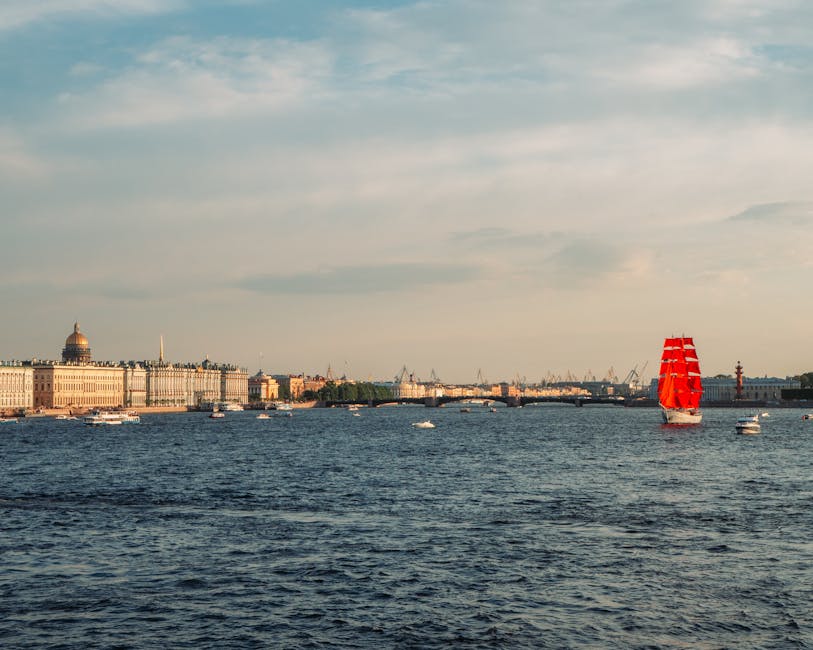
Scarlet Sails («Alye Parusa») is the single biggest public celebration in Russia outside of New Year. It originated as a high-school graduation ceremony and grew into a free million-person spectacle. In 2026 it falls on the night of June 20–21.
The show starts around midnight with a synchronized music and water-jet performance on the Neva between the Hermitage and the Peter and Paul Fortress. A tall ship with red sails — the image references a famous Soviet-era children's book — glides up the river around 1 am, escorted by pyrotechnics launched from the Rostral Columns and the fortress walls. The fireworks last roughly 20 minutes and they are the best fireworks you have ever seen. This is not hyperbole. The Russian military plans them.
How to watch it:
- Palace Embankment (near the Hermitage): the classic spot. Arrive by 9 pm to get a view of the water. Packed but the atmosphere is incredible.
- Spit of Vasilyevsky Island (Strelka): directly opposite the fortress — best fireworks view. Arrive even earlier.
- A rooftop bar or restaurant: book months ahead. The Kempinski Belmond rooftop and several places on Nevsky advertise «White Nights packages» with a view.
- Boat tour: expect $200–400 per person for the night, and book in April or May — they sell out completely.
What to bring: a light jacket (it drops to 12–15°C at 2 am even in warm weeks), water, a portable phone charger. Metro stations near the center close around midnight and reopen at 5 am; plan to walk back or use a taxi. Roads around the embankment are closed from 10 pm to 4 am — do not try to drive.
4. Stars of the White Nights Festival (Mariinsky)
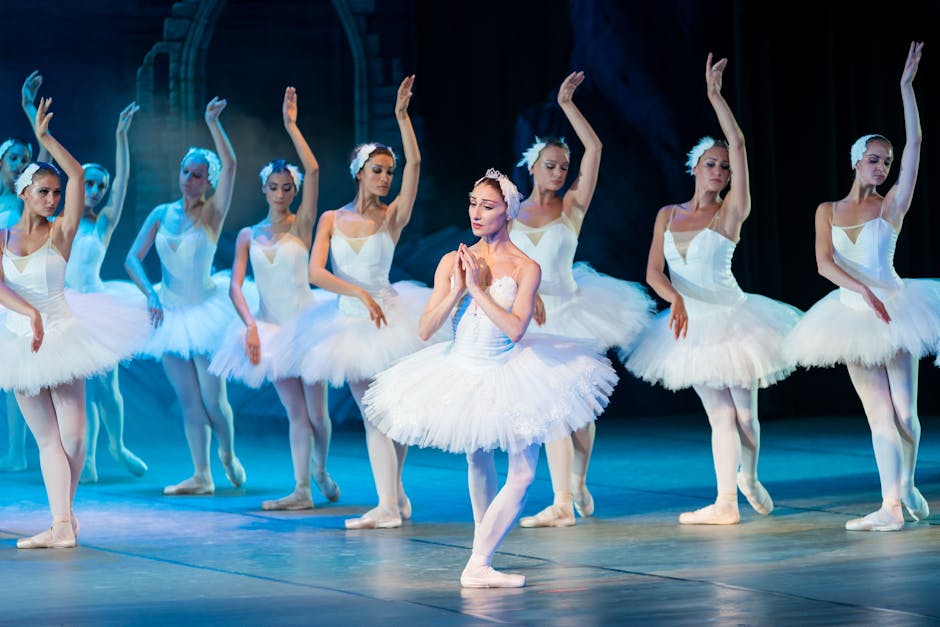
The Mariinsky Theatre's "Stars of the White Nights" festival is the cultural heart of the season. In 2026 it runs May 27 to July 19 across three stages (Mariinsky I, Mariinsky II, and the Concert Hall) with roughly 150 performances.
You get the full range: classical ballet (Swan Lake, Giselle, La Bayadère), the Mariinsky opera repertoire, symphonic concerts, and guest appearances by international dancers and conductors. Valery Gergiev still leads the orchestra. Tickets range from 1,500 RUB (~$18) in the upper balcony to 15,000 RUB (~$180) for prime orchestra seats for a gala ballet.
How to book: tickets go live on mariinsky-theatre.com about six weeks before each performance. Popular shows sell out in 48 hours. International cards work on the official site. Avoid third-party resellers — their markup is 2–3x and the seats are rarely as described.
5. The Raised Bridges at Night
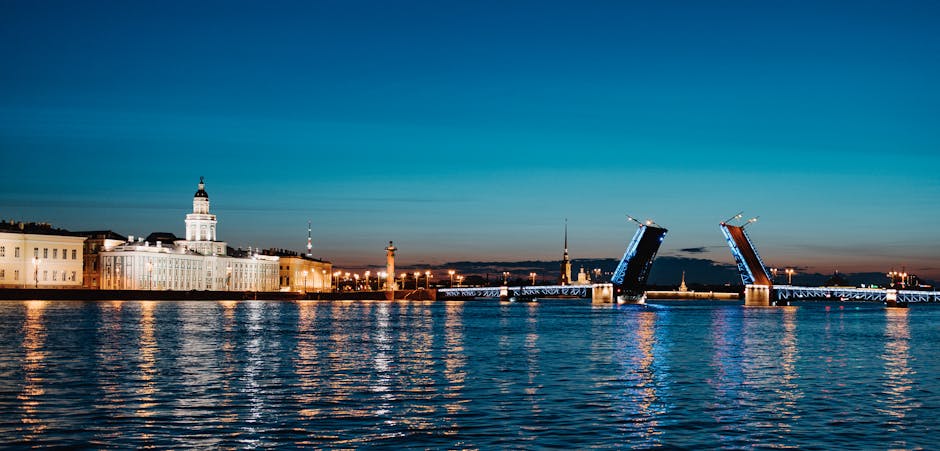
Between late April and mid-November, the Neva's drawbridges are raised every night to let ships through. During the White Nights this becomes a tourist event in itself — the bridges go up against a perpetually lit sky and the city briefly splits into islands that can't cross to each other.
| Bridge | Raise time | Lower time | Notes |
|---|---|---|---|
| Palace Bridge (Dvortsovy) | 01:10 | 02:50 & 03:10–04:55 | The iconic one, directly in front of the Hermitage |
| Troitsky | 01:20 | 04:50 | Great views of the fortress |
| Liteyny | 01:40 | 04:45 | Quieter — good for photos without crowds |
| Birzhevoy | 02:00 | 04:55 | Near the Strelka observation spot |
| Tuchkov | 02:00 | 02:55 & 03:35–04:55 | Same schedule as Palace Bridge |
| Sampsonievsky | 01:40 | 04:45 | Less tourist traffic |
Practical consequence: if your hotel is on Vasilyevsky Island and you stay out past 1 am on the mainland, you either wait until 5 am or take a long detour via the southwestern bridges (Blagoveshchensky stays down until 1:25 am, Volodarsky and Bolshoy Obukhovsky are always passable).
6. Best Things to Do During White Nights
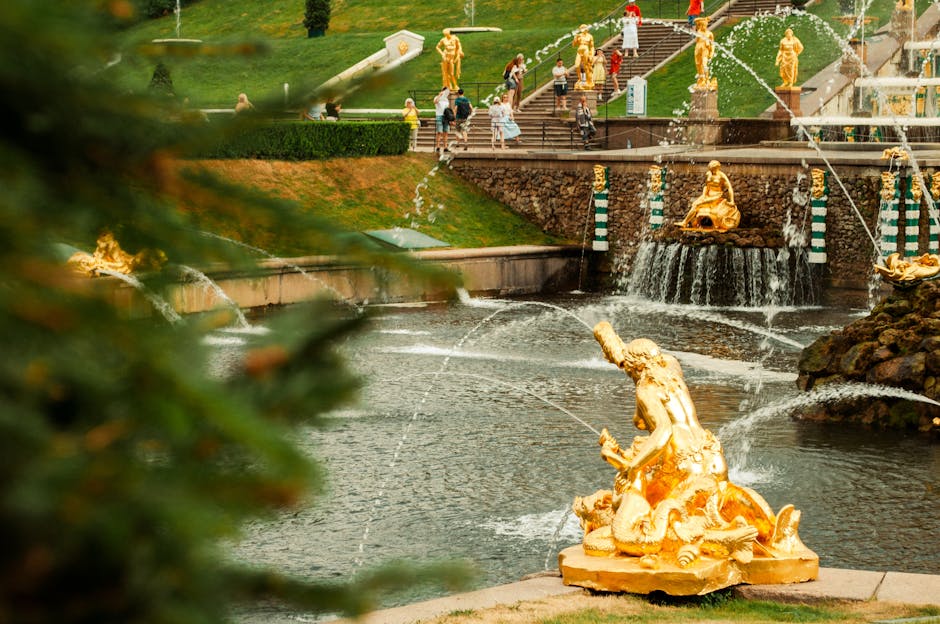
Beyond the two headline events, the White Nights are a season for slow, wandering experiences. A shortlist:
- Night walk along the Moyka and Fontanka canals. The reflections at 2 am are unreal. Start at the Church on Spilled Blood, follow the Moyka south to the Yusupov Palace, then loop back along the Fontanka.
- Rooftop tours. Several licensed operators offer guided access to historic rooftops in the center. $30–60 per person. Book a day ahead.
- Summer Garden (Letny Sad) at midnight. Open until 22:00 most of the season, but special late hours during the solstice week. The 18th-century statues glow blue.
- Peterhof fountains. The Grand Palace fountains run until 20:00 daily through the season. Take the hydrofoil (30 min) from the city center at 18:00 for the best light.
- White Nights jazz festival. Free outdoor concerts at Sevkabel Port and Novaya Gollandiya through June and July.
- Hermitage evening hours. The museum stays open until 21:00 on Wednesdays and Fridays during the season. Fewer crowds than during the day.
- A river cruise under the raised bridges. Departs 00:30 from the Admiralty Embankment. ~$25 per person. Books up a week ahead.
7. Where to Stay (and When to Book)
Hotel prices in St. Petersburg during the White Nights are the highest of the year — roughly 2x the winter rate. The closer you are to Nevsky Prospekt and the Palace Embankment, the more you pay, but also the less time you waste in traffic.
| Area | Best for | Price range (June 2026, per night) |
|---|---|---|
| Central Admiralty / Palace Square | First-timers, walkability | $180–500 (4-star), $600+ (5-star) |
| Nevsky Prospekt East (near Fontanka) | Best value central location | $120–280 |
| Petrogradsky side | Quieter, good for families | $90–200 |
| Vasilyevsky Island | Views, but bridge-raising cuts you off | $80–180 |
| Near Moskovsky Station | Budget, good transport | $50–120 |
Booking timeline: apartments and boutique hotels sell out first — book by April. Four- and five-star chains usually have availability until late May but at peak prices. Airbnbs are fine but check recent reviews: enforcement of short-term rental rules shifted in 2025 and some listings are technically illegal now.
We're publishing a dedicated guide to the best hotels in Moscow and St. Petersburg shortly — check the blog for updates.
Planning the trip yourself?
Most travelers apply for a Russian e-visa themselves on the official MFA portal — and it works. But the site often lags, crashes during peak hours, and does not support error-recovery. If the portal freezes mid-application or rejects your photo for unclear reasons, we file your e-visa for you for a flat $29 fee on top of the official $52 consular charge. Same 6-day processing, zero forms to figure out.
Apply with our help8. Logistics: Visa, Flights, Getting There
Visa: Citizens of 64 countries can apply for a Russian e-visa online. Processing is up to 6 calendar days. The e-visa is valid for 60 days from issuance, with 16 days of stay inside Russia. Apply at least 3 weeks before your trip — portal outages and photo rejections can add days. Check eligibility with our quick quiz.
Flights: Pulkovo Airport (LED) has direct connections from Istanbul, Dubai, Doha, Belgrade, Baku, Yerevan, Tashkent, and several Central Asian hubs. From Western Europe, expect $350–700 round trip via Istanbul or Belgrade. From the US, $900–1400 via Istanbul or Doha. Flights from mainland China resume seasonally.
Airport to city: Aeroexpress and bus K-39 both run to the metro Moskovskaya (~40 minutes, $1). Taxis via Yandex Go cost $15–20 to the center. Avoid unmarked airport taxis — they overcharge.
Internal transport: the St. Petersburg metro is fast, clean, and costs 70 RUB (~$0.85) per ride. During the White Nights the metro closes at 00:30 and reopens at 05:30 — plan walks and taxis around this window.
Money: bring cash (USD or EUR). Foreign-issued Visa and Mastercard do not work inside Russia due to 2022 sanctions. UnionPay and Mir cards work everywhere. ATMs in the center exchange cash at reasonable rates.
Connectivity: buy a local SIM at the airport on arrival. MTS, Beeline, or Megafon; 500 RUB (~$5) for 10 GB and a month of 4G/5G. English-speaking staff at all three airport kiosks.
9. What to Pack for White Nights Weather
Despite the endless daylight, St. Petersburg in June is not warm. Averages run 18–22°C during the day and drop to 12–15°C at night. Rain is frequent — about one day in three — and gusts from the Gulf of Finland can feel cold at 2 am even when the sun is up.
- Layers. A light sweater for daytime plus a windproof jacket for evenings.
- Comfortable shoes. You will walk 15–25 km per day if you do the city properly.
- A sleep mask. Not joking. Hotel blackout curtains are hit or miss and your body clock will rebel.
- A small umbrella. Rainstorms are brief but intense.
- Sunglasses. Also not joking — the low-angle sun at 11 pm is dazzling.
Frequently Asked Questions
The White Nights are a period in late spring and early summer when St. Petersburg experiences near-continuous daylight. Because the city sits at latitude 59.9° north, the sun barely dips below the horizon for about three weeks around the summer solstice, creating a soft twilight from roughly 11 pm to 4 am instead of true darkness.
The official White Nights season runs from May 25 to July 17, 2026. The peak, when it never gets truly dark, lasts from June 11 to July 2, with the summer solstice on June 21. Plan your trip inside this three-week window if you want the full experience.
The full season lasts about eight weeks (late May to mid-July), but the true phenomenon, where the sun never drops more than 7 degrees below the horizon, lasts roughly three weeks around the solstice.
During the peak window it does not get fully dark. Instead of night, you get a long blue-violet twilight. Street lamps turn on for formality, but you can read outside at 1 am without artificial light.
Scarlet Sails (Alye Parusa) is St. Petersburg's largest public celebration, held on the night of June 20, 2026. A tall ship with red sails sails down the Neva, fireworks go off from the Peter and Paul Fortress, and about a million people line the embankments. Entry is free. Show starts around 1 am.
Yes. Citizens of 64 eligible countries can apply for an e-visa online. Processing takes up to 6 calendar days and the e-visa allows 16 days of travel. Apply at least 3 weeks before your trip to account for possible portal delays.
Yes. The central tourist areas are well-policed and pickpocketing is the main concern, especially around Scarlet Sails. Keep your phone and wallet in a front pocket, stick to lit embankments, and use Yandex Go (local Uber equivalent) for late-night rides.